


The Multifamily Supply Cliff: Why This Cycle Is Different
- Feb 18
- 2 min read
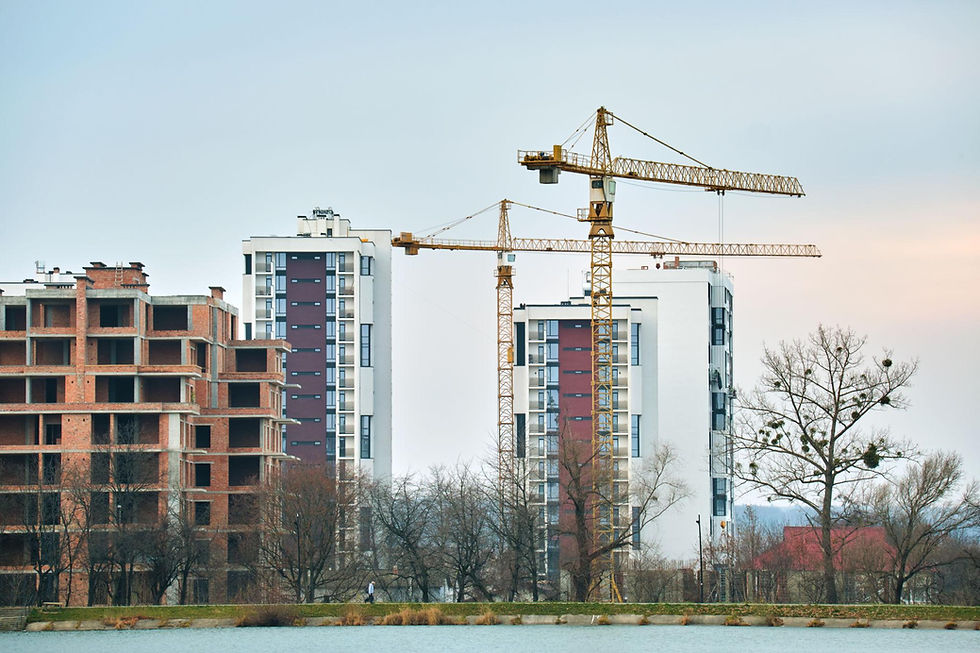
Multifamily development starts have fallen to their lowest level since 2012. Only 300,000 units are projected for delivery in 2026 — a 74% decline from the 2021 peak and the lightest completion volume in more than a decade.

At the same time, demand remains durable. National rents have climbed to $1,713, with most major markets posting monthly gains. Transaction volume has rebounded 9.4% to $165.5B, and cap rates have stabilized around 5.7%.
The equation is straightforward: constrained supply paired with steady demand creates the conditions for pricing power to return.
But cycles are rarely about headlines. They are about timing.
Market Insights: The 24-Month Gap That Matters
Construction pipelines do not refill overnight. Even if capital loosens tomorrow, labor constraints, financing costs, and entitlement timelines push delivery 18–24 months out.
That lag is critical.
When starts slow materially, future competition declines before fundamentals visibly improve. Operators who secured basis during the reset period now sit in front of a tightening inventory curve.
Markets likely to benefit most:
Supply-constrained coastal and infill submarkets
Regions with stalled permitting pipelines
Assets where replacement cost significantly exceeds current acquisition basis
Stabilized vintage product (1985–2015) with light operational upside
The opportunity is not speculative growth. It is structural imbalance.
The Capital Disconnect
Institutional capital is returning — but cautiously. Family offices and private equity groups are still waiting for macro certainty.
Cycles do not reward certainty. They reward disciplined conviction before consensus.
By the time sentiment turns optimistic, pricing has already adjusted.
Framing the Opportunity
In this environment, the most effective narrative is not “growth.” It is asymmetry.
Downside is limited by constrained future deliveries. Upside is driven by rent resilience and replacement cost floors. Time arbitrage exists because supply cannot respond quickly.
Scarcity accelerates decision-making more than optimism ever will.
Positioning matters.
Success Story Pattern: Who Wins in This Phase
Operators positioned to outperform typically share four characteristics:
Reduced leverage through 2023
Tight expense control and operating discipline
Limited floating-rate exposure
Occupancy consistently above 93%
Those who stabilized early now control durable income streams in a declining supply environment.
They did not predict the peak. They managed through the trough.
Overcoming the Capital Freeze
Sponsors raising capital in today’s market should focus on clarity and durability:
Present downside stress scenarios transparently
Highlight replacement cost deltas
Align exit assumptions with the delivery gap timeline
Anchor underwriting to realistic rent growth, not optimism
Capital moves when risk is framed intelligently.
The Window Is Narrow
If development starts remain muted through 2026, the 2027–2028 cash flow profile for stabilized assets strengthens meaningfully.
This is not a boom cycle. It is a re-entry phase.
By the time headlines declare recovery, the pricing opportunity will likely be gone.
The Strategic Question
Are you underwriting multifamily as a short-term stabilization trade — or as a three- to five-year compounding income strategy aligned with the supply gap?
That distinction determines whether you are early or late.


Comments